
Security clearance specialist Sean Bigley highlights an often-overlooked link between timeshare ownership, financial issues and US security clearance denials.
US security clearance: who needs one?
In the United States, anyone whose role has even an indirect link to national security may need a security clearance. That can include work for the military or the federal government. While it’s easy to assume clearances are limited to senior posts, the requirement often extends further—including to roles such as librarians and IT administrators.

It’s not only government employees, either. Private organisations that work with the government routinely require staff to be cleared. Research organisations, think tanks and anyone operating under a federal grant or contract is likely to face a background check.
Overall, an estimated 4.3 million Americans require official security clearance for their work.
Timeshare ownership and security clearance denials
Sean Bigley is a retired lawyer who specialised in security clearance matters, representing clients throughout the process—including applications, revocations, denials and appeals.
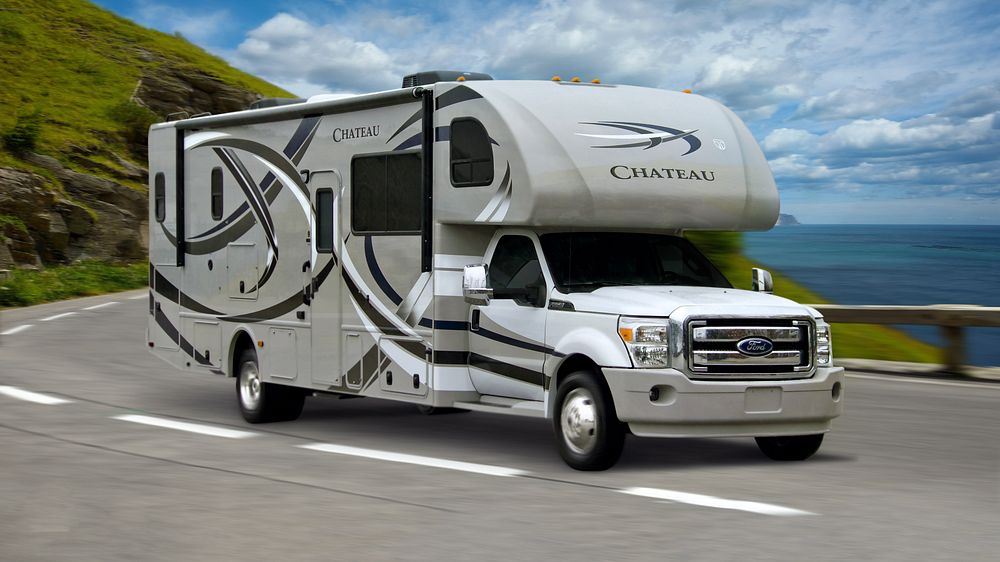
On his website, Sean reports that: "year after year, across nearly every federal agency, financial problems far surpass every other category of adjudicative issue as the top reason for security clearance denials and revocations". He adds that "a whole lot of those cases involve, you guessed it: timeshares and man-toys* (such as boats and RV's)."
*Sean uses the term 'man-toys' because, as he notes: "'woman-toys' sounds awkward and 'adult-toys' has a different connotation."

Bigley is careful to stress that the relationship between timeshare ownership and clearance revocations is correlational, not causal. In other words, buying a timeshare doesn’t automatically make someone a security risk. As Sean puts it: "there is nothing objectively wrong with buying a timeshare. Or a recreational vehicle (RV). Or a boat."
"I don’t personally think any of those things are smart investments, but if that’s your jam, you do you."
So why do timeshare owners show up in clearance cases?
Based on a decade representing clearance clients, Bigley believes that, "there is a certain personality type that tends to be drawn in by timeshare pitches, and gravitate toward boats and RV’s. It’s what I would best describe as the live-and-let-live type. And unfortunately, they often take the same carefree attitude toward paying their bills."
To see the pattern for yourself, Sean suggests searching the public case record by entering ‘timeshare’, ‘recreational vehicle’ or ‘boat’ into the search function on the Defense Office of Hearings and Appeals (DOHA) website.
The pattern Bigley describes is straightforward: people buying timeshares, boats or RVs often underestimate the total cost—either the upfront finance or the ongoing maintenance—and then fall behind on payments. That can lead to a credit rating taking a serious hit and, in some cases, legal action. In turn, government attorneys may characterise the applicant as reckless or financially irresponsible, urging the judge to cancel, revoke or refuse the clearance.
Unexpected timeshare costs (and why debt matters)
It’s widely accepted that boats are a poor financial investment. Many informed sources suggest planning for upkeep and other costs of around 10% of the purchase price per year, on top of significant depreciation. Similar logic can be applied to RVs: you face both the costs of owning a vehicle and the ongoing expense of maintaining a small home.
Timeshare ownership can follow the same pattern. A timeshare bought for tens of thousands of dollars/pounds may then be worth literally nothing on the resale market.
One reason is simple: many buyers don’t want to take on the ongoing financial obligations that come with the membership. To exit a timeshare contract, it’s common to need to retain the services of experts.
Many people purchase timeshares on credit arranged by the resort. That can increase the overall cost significantly—sometimes up to double the total outlay.
Ongoing timeshare costs can also be substantial. It often costs more in annual fees than it costs a non-owner to stay in accommodation of the same standard (sometimes even within the same complex). Owners must pay whether they holiday or not. Resorts may also raise charges as often and by as much as they choose. On top of that, there can be additional fees such as exchange fees, charges to change your usage, and special levies.
Because timeshare ownership offers such weak financial value, a great deal is spent on marketing—pushing customer acquisition costs to an average $5075. Highly sophisticated, high-pressure sales operations—sometimes accounting for up to 80% of the purchase price—are then used to persuade people to buy something that many experts believe is against the buyer’s financial interests.
In Bigley’s view, this feeds into the wider issue behind many clearance outcomes: not the timeshare itself, but the financial decisions and debt risk that can come with it. He says his experience suggests certain people are more likely to fall for the sales patter—and that those traits can also indicate poorer financial discipline.
"Here at ECC, we are of the opinion that timeshare sales tactics are so skilled that anyone at all can fall for them," comments Greg Wilson, CEO of European Consumer Claims. "The best strategy is not to accept the generous marketing offers of free holidays and theme park tickets when they are offered."

"As the saying goes: 'you get nothing for nothing in this life.'"
I bought a timeshare. How do I get out?
If you’ve bought a timeshare membership and now regret it, help is available.
Get in touch with our team to discuss your options. We can help.